Modular MEP Support Systems for Faster Installation and Higher Efficiency
Author : Ravichandra K G
(June 24, 2026)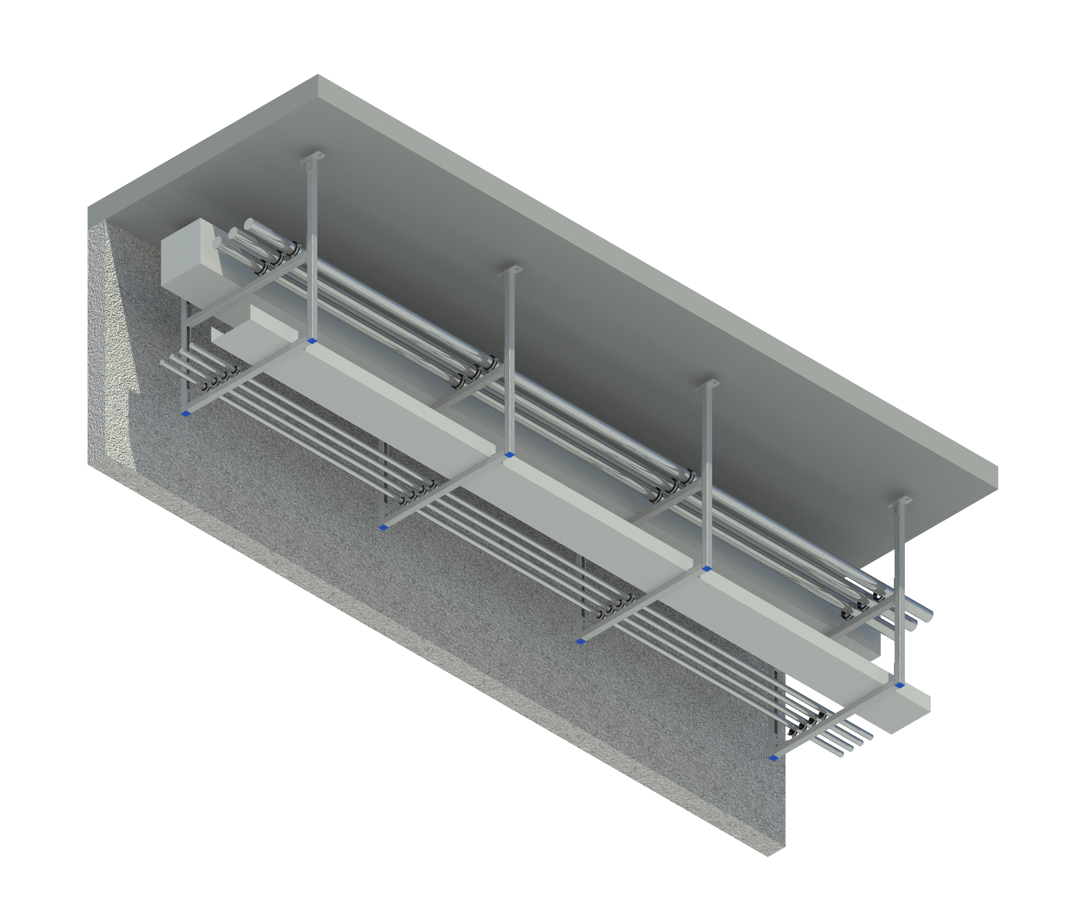
MEP modular support systems make construction work faster, safer, and easier to manage. Instead of making traditional steel supports at the site by cutting, welding, and painting. Modular systems use ready-made parts such as strut channels, brackets, channel nuts, and heavy-duty channels & as these are bolted connections, installation is simple and clean.
One of the biggest advantages is speed. Traditional welded supports need skilled workers, hot work permits, fire-watch, cooling time, repainting, and inspection. Modular supports reduce most of these steps. Workers can assemble standard parts quickly using basic tools and torque wrenches. If alignment needs correction, they can loosen the bolt, adjust the part, and tighten it again as per OEM torque requirements.
These systems also reduce the need for highly skilled welders and fabricators. With basic training, semi-skilled workers can install modular supports correctly. This helps with manpower planning, reduces errors, and improves productivity on site.
Safety is another important benefit. Since less cutting and welding is done at the site, there is less hot work, less scrap, and fewer trip hazards. Multi-service racks can also be assembled at ground level, checked and then lifted into position, reducing the time workers spend on scaffolding or elevated platforms.
Modular systems are also flexible. Construction sites often face design changes, such as pipe route changes or added conduits. In a welded system, this may require cutting and rework. In a modular system, the installer can adjust the bracket or channel nut without damaging the support. This saves time, labor, and material. However, if services are changed from the approved drawing, the new arrangement must be checked and approved by the OEM or technical design team to ensure safe load capacity, support spacing, and stability.
Correct installation is critical to get the full benefit of MEP modular support systems. The pipe layout and support arrangement shown in the approved drawings must be followed at site, as the support spacing, load distribution, clearances, and anchoring locations are designed based on these drawings. Since changes and rerouting in MEP services are commonly seen during execution, any deviation from the final approved drawings should be reviewed and confirmed by the OEM or technical design team before installation. This ensures that the revised route does not affect load capacity, stability, access for maintenance, or the long-term safety of the system.
They also help control cost. Installation is faster, material waste is lower, and heavy welding equipment is usually not required. Standard parts make planning easier and reduce unexpected site work.
Quality is more consistent because many components are factory-made and supplied with protective finishes such as hot-dip galvanizing, zinc plating, or stainless steel. This improves corrosion resistance and avoids painting at the site.